



Archiving legacy patient data delivers major cost savings
In Central Uusimaa, the investment paid for itself in less than a year
Wellbeing services counties have inherited a large number of different patient and client information systems from municipalities and cities. Maintaining these systems places a heavy burden on county finances and complicates the daily work of professionals. Legislation requires wellbeing services counties to retain this data. The number of legacy and mutually incompatible patient information systems varies by county, but on average there are dozens of separate databases.
“In the Central Uusimaa wellbeing services county (Keusote), there were 16 separate municipality-specific client and patient information systems. Each database is typically maintained by a different service provider, and the way information is retrieved varies from one system to another,” says Raija Rahkila-Bergström, Project Manager at Keusote.
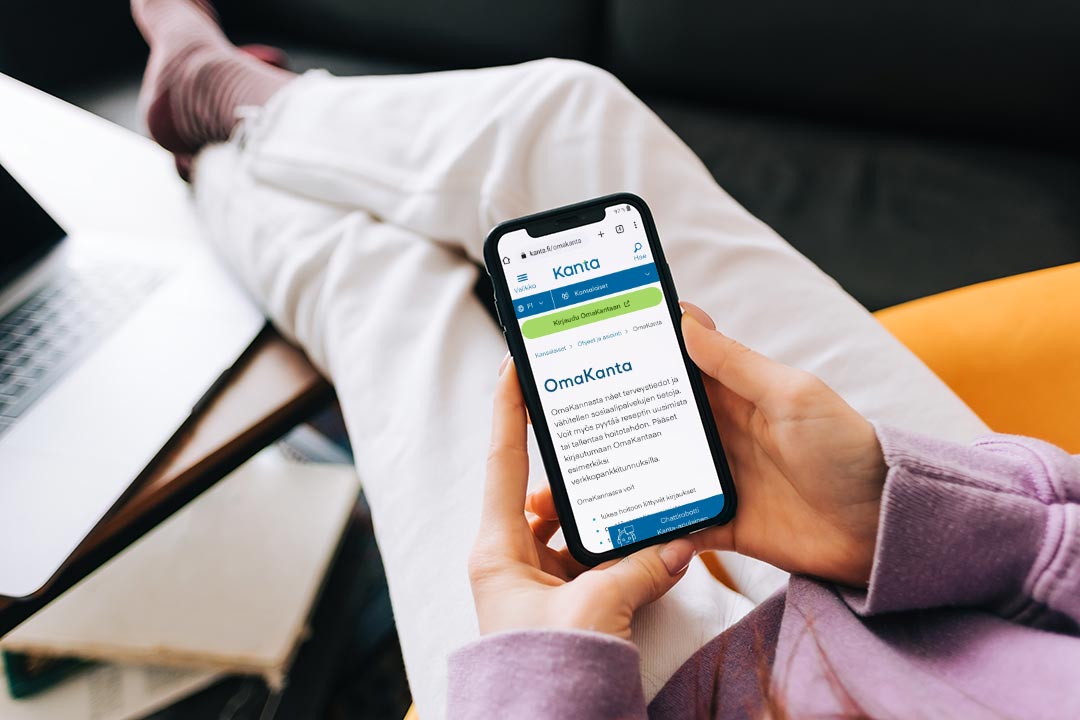
Transferring legacy patient records to the national Kanta Services is a major undertaking for both county staff and external service providers. However, the investment pays for itself in both financial terms and operational benefits.
“Our investment was approximately 2.6 million euros, but once the outcome enables us to decommission the old systems, the annual savings amount to about 3.2 million euros. The payback period for the project is therefore around ten months,” says Hanna Downtown, ICT Area Director at Keusote.
Sanna Kaskivirta, Development Coordinator at the Wellbeing Services County of North Savo, also confirms that the long-term savings potential is substantial.
“When the maintenance costs of the various systems come to an end, our wellbeing services county saves hundreds of thousands of euros per year,” Kaskivirta says.
Transferring large databases requires precision and specialized technical expertise
Migrating legacy patient records and databases containing even millions of documents to the Kanta Services is a complex process that requires specialized technical expertise and continuous validation of the data being transferred. This work is carried out by software companies Atostek and Digital Workforce, which act as partners in the projects. Atostek’s information management service ERA has been developed to process data in accordance with Kanta Services standards, while Digital Workforce’s software robot streamlines the extraction of data from source systems.
“Atostek’s expertise in Kanta Services standards is crucial when databases are converted and transferred. With Atostek’s help, our wellbeing services county was able to archive legacy patient and client records on an exceptionally tight schedule,” Downtown says.
An individual patient and client data archiving project is typically delivered by a team of around 10–15 people, consisting of both county staff and external experts. The duration of a project can exceed one year.
Operational benefits make professionals’ daily work more efficient
In addition to financial benefits, centralizing data brings significant operational improvements directly to the everyday work of professionals in wellbeing services counties. When legacy data is centralized in a single location, information can be found more quickly and reliably.
“Previously, professionals had to jump between municipality-specific systems to search for old information, and logging into each system required separate, system-specific credentials. The data storage formats also varied from one system to another,” Rahkila-Bergström says.
According to Kaskivirta, finding information in the archive is still not always entirely straightforward, but centralization in Kanta saves professionals time.
According to Miika Parvio, Business Director for Healthcare Services at Atostek, transferring legacy patient and client data to the centralized and secure Kanta Services environment also lays the foundation for potential secondary use of data in the future.
“Kanta Services data is a large and significant database even by international standards. Around the world, there is rapid development of applications such as predictive care solutions that are based on patient data. If it chooses to do so, Finland has a strong advantage at its disposal, and the ongoing archiving of legacy patient records into Kanta Services further strengthens the system,” Parvio says.
Contacts
Miika Parvio, +358 45 113 8881, Atostek Oy, miika.parvio@atostek.com
Hanna Downtown, Central Uusimaa Wellbeing Services County, hanna.downtown@keusote.fi
Sanna Kaskivirta, Wellbeing Services County of North Savo, sanna.kaskivirta@pshyvinvointialue.fi
Atostek provides multidisciplinary expert services in information systems and software development. Its key application areas include healthcare and medicine, industrial product development, and public sector IT consulting. Atostek employs more than one hundred people across its offices in Tampere, Espoo, and Jyväskylä.